
Pillar 4
- OUR PROMISE
We improve and adapt our medicines through real-world patient community insights
The life cycle of a medicine does not stop with its market launch - it continues every day, with every patient. For us, this makes improving existing medicines just as important as developing new ones. Our teams use integrated evidence generation plans to collect data on treatment use and long-term benefits.
In 2025, patient insights crucially informed our educational efforts
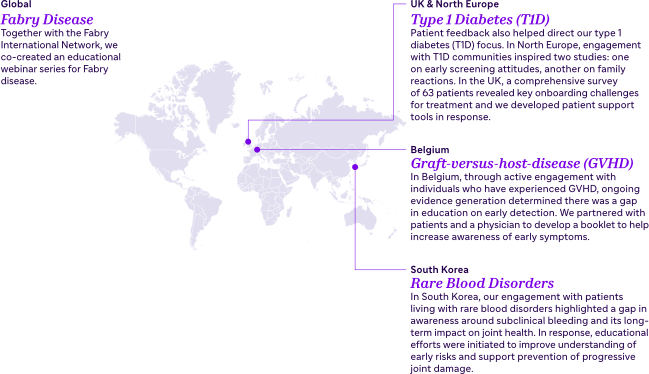
This diagram illustrates a world map highlighting three geographic regions and their associated patient engagement initiatives.
Global Fabry Disease
Together with the Fabry International Network, we co-created an educational webinar series for Fabry disease.
UK & North EuropeType 1 Diabetes (T1D)
Patient feedback guided the T1D focus. In North Europe, engagement with T1D communities inspired two studies: one on early screening attitudes, another on family reactions. In the UK, a survey of 63 patients revealed key onboarding challenges for treatment, leading to the development of patient support tools.
BelgiumGraft-versus-host disease (GVHD)
Through active engagement with individuals who have experienced GVHD, ongoing evidence generation identified a gap in education on early detection. A partnership with patients and a physician led to the development of a booklet to increase awareness of early symptoms.
South KoreaRare Blood Disorders
Engagement with patients living with rare blood disorders highlighted a gap in awareness around subclinical bleeding and its long-term impact on joint health. Educational efforts were initiated to improve understanding of early risks and support prevention of progressive joint damage.

Medical devices
Comprehensive monitoring programs quickly gather and implement feedback. As well, we work to increase product sustainability through eco-design, aiming to minimize the environmental footprint of our medicines and vaccines, while adapting to ongoing climate challenges.

Eco-design
Starting in 2025,
100%of our new medicines and vaccines adopted an eco-design approach